Introduction: Two Attacks, One Question
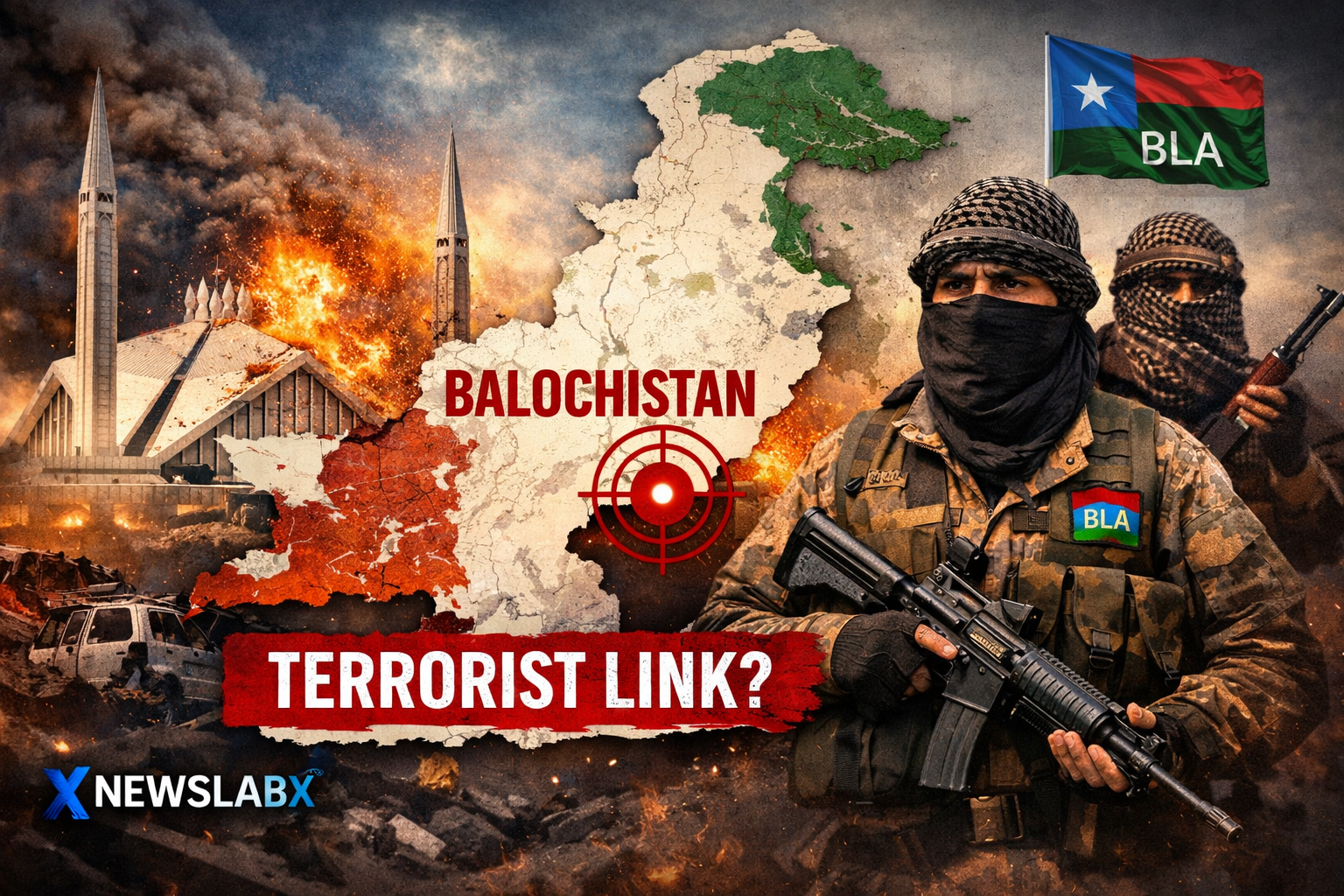
Pakistan has once again been shaken by a wave of terrorism that appears to be unfolding on multiple fronts. In a troubling span of days, the country witnessed deadly militant attacks in Balochistan Balochistan Attacks, followed by a mass-casualty bombing at a mosque in Islamabad, the federal capital.
While authorities continue to investigate both incidents independently, a critical question has begun to surface within security circles, media, and public discourse:
Are these attacks isolated incidents — or do they represent a coordinated or ideologically linked escalation of terrorism in Pakistan?
This article explores whether there is any operational, strategic, or ideological connection between the recent Balochistan Liberation Army (BLA)-linked violence in Balochistan and the Islamabad mosque bombing, without drawing premature conclusions — but by examining patterns, history, and emerging security indicators.
Overview of Recent Terror Balochistan Attacks
A Surge in Militancy
Over the past week, Balochistan experienced a series of coordinated militant attacks targeting:
- Security checkpoints
- Government installations
- Law enforcement patrols
- Transport and infrastructure nodes
According to official statements, Pakistan’s security forces launched large-scale counterterrorism operations, claiming to have neutralized dozens of militants, many allegedly linked to the Balochistan Liberation Army (BLA).
Who Is the BLA?
The Balochistan Liberation Army (BLA) is a banned separatist militant organization that has historically focused on:
- Armed insurgency in Balochistan
- Attacks on security forces
- Sabotage of infrastructure
- Opposition to state presence and development projects
Traditionally, BLA operations have been geographically concentrated in Balochistan and have largely followed an ethno-nationalist insurgency model, rather than urban mass-casualty terrorism.
However, recent years have shown evolving tactics, including suicide bombings and high-profile attacks beyond remote regions.
The Islamabad Mosque Bombing: A Rare and Alarming Strike
What Happened?
The attack on a mosque in Islamabad marked a deeply disturbing development:
- A densely populated civilian religious site was targeted
- The attack resulted in a high number of casualties, with over 100 injured
- It occurred in a city considered one of Pakistan’s most secure zones
Historically, Islamabad has remained relatively insulated from large-scale terrorist attacks compared to cities like Karachi, Quetta, or Peshawar. This makes the incident not just tragic — but strategically significant.
Why the Islamabad Attack Raises Red Flags
1. Urban Terrorism Shift
Urban attacks, especially in the capital, suggest:
- Advanced reconnaissance
- Logistical support networks
- Safe houses or facilitators
- Confidence in breaching security layers
This raises concerns that militant groups may be expanding operational theaters.
2. Sectarian or Symbolic Targeting
Mosques and religious gatherings are often targeted to:
- Maximize casualties
- Create fear and polarization
- Trigger sectarian unrest
Such objectives historically align more closely with religious extremist outfits, rather than purely separatist groups like the BLA — which complicates attribution.
Examining a Possible Link: Coincidence or Coordination?
1. Timing of Attacks
One of the most striking aspects is timing.
- Balochistan attacks occurred amid ongoing security operations
- Islamabad bombing followed shortly afterward
In counterterrorism analysis, temporal proximity can sometimes indicate:
- Retaliation
- Diversion tactics
- Strategic signaling
However, timing alone does not confirm coordination.
2. Tactical Differences
| Aspect | Balochistan Attacks | Islamabad Mosque Attack |
|---|---|---|
| Geography | Remote / conflict zones | Urban capital |
| Targets | Security forces, infrastructure | Civilian religious site |
| Modus Operandi | Ambushes, raids | Suicide bombing |
| Typical Actors | Separatist militants | Often sectarian extremists |
This suggests different operational DNA, though collaboration or outsourcing cannot be ruled out.
Can BLA Be Linked to the Islamabad Attack?
What History Tells Us
Traditionally:
- BLA avoids sectarian framing
- Focuses on state and security targets
- Operates within Balochistan
However, militant ecosystems evolve.
Recent global and regional trends show:
- Tactical borrowing between groups
- Shared logistics or facilitators
- Temporary alliances of convenience
The Hybrid Threat Model
Security experts increasingly warn of hybrid militancy, where:
- Separatist groups collaborate with religious extremists
- Criminal networks provide logistics
- Ideology becomes secondary to impact
This does not mean BLA directly carried out the Islamabad attack — but it raises the possibility of indirect links, such as:
- Shared facilitators
- Training overlaps
- Mutual exploitation of instability
The “Fitna” Narrative and State Perspective
Pakistani authorities have increasingly framed militant violence under the broader concept of “Fitna” — internal destabilization driven by extremist networks.
From the state’s viewpoint:
- Baloch insurgency
- Religious extremism
- Urban terrorism
…are no longer isolated threats, but interconnected challenges that can reinforce each other during periods of heightened tension.
Why Authorities Are Being Cautious
So far, officials have not publicly confirmed any direct link between the Islamabad attack and BLA-related violence.
This caution is deliberate because:
- Premature attribution can mislead investigations
- Terror groups benefit from confusion
- Legal and diplomatic consequences are significant
Responsible journalism, therefore, requires analysis without assumption.
Strategic Implications for Pakistan’s Security Landscape
1. Expansion of the Battleground
If militancy spreads simultaneously across:
- Peripheral conflict zones (Balochistan)
- Core urban centers (Islamabad)
…Pakistan faces a multi-layered security challenge.
2. Psychological Impact
Attacks in the capital are designed to:
- Undermine public confidence
- Signal reach and capability
- Pressure policymakers
This article addresses high-impact search intent around:
- Islamabad mosque bombing analysis
- Balochistan terror attacks 2026
- BLA terrorism Pakistan
- Terrorism nexus in Pakistan
- Urban terrorism Islamabad
- Pakistan counterterrorism challenges
Conclusion: Questions That Demand Answers
At this stage, there is no conclusive evidence that the Islamabad mosque bombing was directly orchestrated by the Balochistan Liberation Army.
However, what is evident is that Pakistan is confronting a complex and evolving terrorism landscape, where:
- Multiple militant ideologies operate
- Geographic boundaries are blurring
- Tactical escalation is visible
The real danger lies not just in individual attacks, but in the possibility of convergence — whether ideological, logistical, or opportunistic.

A dedicated journalist at Newslabx focused on reporting crime, terrorism, and national security. With a strong commitment to truth, accountability, and public awareness, delivers accurate and impactful reporting that highlights critical issues affecting society.