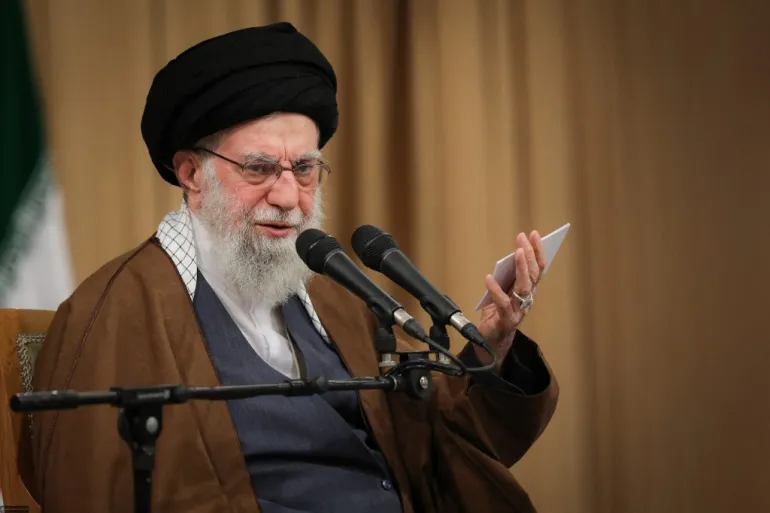
Iran’s Supreme Leader Ayatollah Ali Khamenei has accused groups linked to the United States and Israel of being responsible for the deaths of “several thousands” of people during recent anti-government protests across the country. His remarks mark a major development, as this is the first time Iran’s top authority has publicly suggested such a high casualty figure.
Speaking at a student gathering in Tehran, Khamenei claimed that foreign-backed protests caused large-scale destruction and resulted in thousands of deaths. He stated that individuals connected to the United States and Israel played a direct role in the violence that lasted for more than two weeks.
Accusations Against the United States and Israel
Khamenei openly blamed both nations, calling former US President Donald Trump a “criminal” and accusing him of personally being involved in what he described as an international conspiracy against Iran. According to Iranian state media, he said that unlike previous unrest, this time the US president himself was deeply involved.
Iranian authorities have repeatedly pointed fingers at foreign powers for stirring unrest, especially targeting Israel and the United States. Officials claim these long-time geopolitical rivals were directing activities on the ground and fueling instability.
Khamenei warned that although Iran does not seek to escalate tensions beyond its borders, those held responsible would face consequences. He stated that Iran would not drag the country into war but would not allow domestic or international criminals to go unpunished.
New Claims About Casualties
One of the most striking aspects of Khamenei’s speech was his mention of deaths in the thousands. Previously, Iranian officials had acknowledged only hundreds of casualties, including members of the security forces.
Al Jazeera correspondent Resul Serdar reported that this claim introduced a new narrative. He said this was the first time Khamenei had provided an estimate suggesting thousands were killed, adding that the Supreme Leader accused violent protesters of causing these deaths.
There is still no officially confirmed death toll. However, the US-based rights group HRANA claims that around 3,000 people may have been killed during the unrest. This figure aligns partially with statements from some international human rights organizations, which believe the actual number could be much higher than what officials have announced.
Arrests and Alleged Destruction
Iranian authorities have also reported that nearly 3,000 people were arrested in connection with the protests. Khamenei further accused demonstrators of widespread destruction, including burning more than 250 mosques and medical facilities.
The government insists that protests initially began peacefully on December 28 due to rising prices and economic hardships in several Iranian cities. Officials said they acknowledged public concerns at first.
However, authorities now claim the demonstrations were later hijacked by violent groups who allegedly received instructions and support from foreign powers. According to Iranian officials, those involved were trained, financed, and equipped by outside actors, with Donald Trump described as being at the center of this plot.
Internet Blackout and Restoration
During the height of the protests, Iran imposed a near-total internet blackout, which limited communication nationwide. The semi-official Fars News Agency later reported that authorities had restored SMS services as part of a phased rollback of the shutdown after eight days of disruption.
This move was seen as an attempt to gradually normalize communication services across the country.
Conclusion
Khamenei’s statements represent a significant shift in Iran’s official stance on the scale of casualties. While independent verification remains difficult, the claims have intensified debate both domestically and internationally.
As services slowly return and protests subside, attention remains on the political consequences of the unrest and the ongoing tensions between Iran, the United States, and Israel.
Iran’s Supreme Leader Ayatollah Ali Khamenei has made a strong and controversial statement regarding the recent wave of anti-government protests in the country. He has accused actors linked to the United States and Israel of being responsible for the deaths of “several thousands” of people during weeks of unrest across Iran.
This marks the first time Iran’s highest authority has publicly claimed such a high number of casualties, making it a significant shift from earlier official statements that acknowledged only hundreds of deaths.
Khamenei’s Statement
Addressing a gathering of students in Tehran, Khamenei said that foreign-backed groups caused “massive damage” and were behind the deaths of thousands of people. He specifically blamed the United States and Israel, calling former US President Donald Trump a “criminal” and accusing him of being personally involved in what he described as an international plot against Iran.
According to Iranian state media, Khamenei claimed that while previous protests had limited foreign involvement, this time the role of the US was much more direct. He alleged that the American president was at the center of efforts to destabilize the country.
Government Narrative on Protests
Iranian officials maintain that the protests initially began peacefully in late December, triggered by rising prices, economic difficulties, and public frustration. Authorities say the government was acknowledging people’s concerns and hardships at the start.
However, officials now argue that the demonstrations were later “hijacked” by violent groups who were allegedly receiving instructions and support from foreign powers. The Iranian leadership claims these groups were trained, funded, and equipped by outside forces.
Khamenei echoed this narrative, stating that the unrest was no longer about public demands but had turned into a coordinated effort to damage the country’s stability.
Casualty Figures and Arrests
One of the most notable aspects of Khamenei’s speech was his reference to the death toll. For the first time, he suggested that thousands had been killed during the protests. This contrasts with earlier official figures that acknowledged hundreds of casualties, including security personnel.
International human rights organizations have also raised concerns about the scale of the violence. Some groups estimate that the number of deaths could be much higher than what Iranian officials have publicly admitted. A US-based rights group, HRANA, reported that around 3,000 people may have been killed during the unrest.
Iranian authorities have also confirmed that approximately 3,000 people have been arrested in connection with the protests.
Allegations of Destruction
Khamenei accused protesters of widespread destruction, including the burning of mosques and medical facilities. According to Iranian officials, more than 250 public buildings were damaged during the unrest.
The government portrays these actions as evidence that the protests were no longer peaceful demonstrations but had turned into violent operations aimed at destabilizing the state.
Iran’s Warning to Foreign Powers
While Khamenei stated that Iran does not want to escalate tensions beyond its borders, he warned that those responsible for the violence would face consequences. He said Iran would not drag the country into war, but it would not allow “domestic or international criminals” to go unpunished.
This statement reflects Tehran’s ongoing stance of resisting foreign interference while avoiding direct military escalation.
Internet Restrictions and Gradual Restoration
During the peak of the protests, Iran imposed severe internet restrictions, including near-total blackouts in some areas. These measures drew criticism from international observers and rights groups.
Recently, Iranian authorities began restoring services. The semi-official Fars News Agency reported that SMS services have been restored nationwide as part of a phased rollback of the internet shutdown.
International Reaction
Khamenei’s accusations have added fuel to already tense relations between Iran, the United States, and Israel. Western governments have repeatedly denied directing or funding protests inside Iran.
Political analysts say such statements reinforce Iran’s long-standing narrative that foreign powers are behind domestic unrest, especially during periods of economic difficulty and public dissatisfaction.
Conclusion
Ayatollah Khamenei’s claim that thousands were killed during the protests represents a major development in Iran’s official narrative. While independent verification of the death toll remains difficult, human rights organizations continue to call for transparency and accountability.
As Iran gradually restores internet services and public life returns to normal, the long-term political impact of these protests remains uncertain. What is clear, however, is that the unrest has highlighted deep economic and social challenges within the country, as well as the ongoing tensions between Iran and Western powers.